
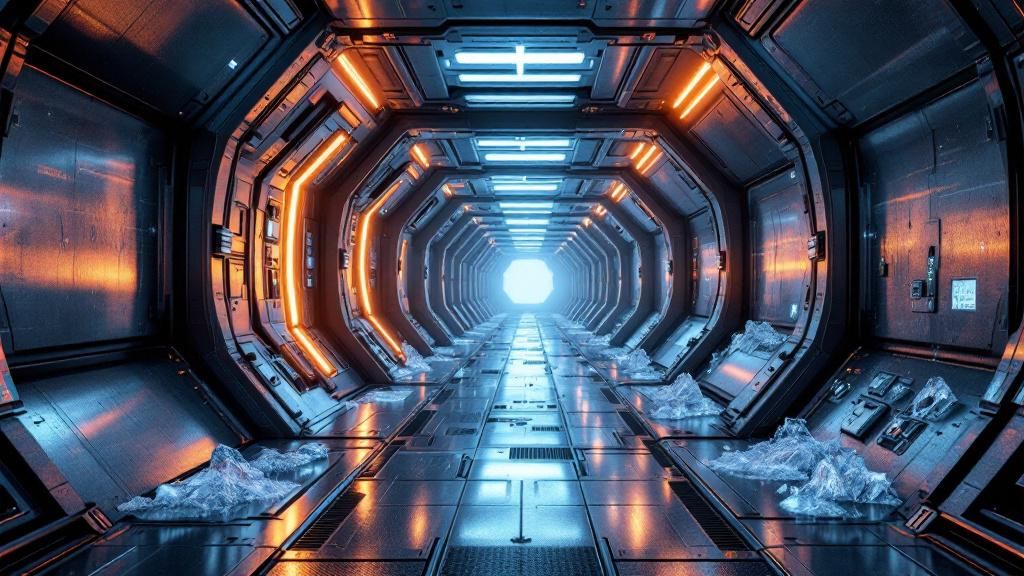
Supermassive Games has unveiled a extensive PlayStation 5 Pro improvement for its horror narrative title Directive 8020, arriving on 12 May 2026. The enhancement harnesses the console’s cutting-edge technical capabilities, encompassing PlayStation Spectral Super Resolution (PSSR), ray-traced rendering, and dynamic shadow rendering to elevate the narrative cinematic experience. The upgrade delivers crisper imagery, enhanced lighting fidelity, and improved atmospheric richness throughout the deadly mission aboard the Cassiopeia as the crew fights to overcome an encounter with a shape-shifting alien organism. According to Will Burdon, Technical Director at Supermassive Games, the improvements intensify the suspense and emotional impact that form the core of the game’s choice-driven narrative.
Horror Cinema Reinvented for Next-Gen Platforms
Directive 8020 was conceived from the outset as a cinematic storytelling experience, prioritising atmospheric storytelling and meaningful player choice above all else. The PlayStation 5 Pro upgrade allows Supermassive Games to realise this vision with unparalleled visual clarity, presenting each scene with enhanced detail that strengthens the emotional impact of pivotal moments. Character work, facial animation, and environmental detail now leverage the console’s extra processing capability, creating a more immersive experience where subtle visual details become crucial to the storytelling. When players need to choose which character to trust—particularly when faced with identical appearances—these refined enhancements in character portrayal become crucial to the horror experience.
Lighting has long been one of horror’s most narrative devices, and the PS5 Pro improvements amplify this dramatically. Advanced ray tracing enables light to exhibit realistic precision, bouncing naturally through metallic corridors and bouncing across surfaces with genuine realism. Warning lights illuminate bulkheads whilst firelight dance across faces, producing shifting shadows that shift unpredictably throughout environments. This heightened visual authenticity transforms the Cassiopeia from a static backdrop into a living, breathing space where danger lurks in every shadow, intensifying the unease throughout the whole gameplay.
- Ray tracing generates authentic light and shadow effects across corridors
- PSSR technology improves environmental details and character model sharpness
- Dynamic shadows provide depth, movement, and unpredictability to scenes
- Enhanced facial animations amplify emotional resonance during key story moments
Aesthetic Improvements Building Atmospheric Tension
AI-Powered Transparency Through PSSR Technology
PlayStation Spectral Super Resolution (PSSR) constitutes a significant leap forward in visual presentation for Directive 8020. Sony’s AI-driven upscaling technology intelligently enhances picture quality and precision on a frame-by-frame basis, altering how players perceive the Cassiopeia and its hostile environment. The metallic corridors now gleam with crisp definition, whilst surrounding elements that reveal the narrative of the ship’s dire circumstances appear with enhanced clarity. Player avatars profit likewise from this refinement, permitting subtle expressions and details to register with greater precision.
The frost accumulating on the medical laboratory’s surfaces and the distortion seen in reflective visors demonstrate how PSSR enhances the game’s visual language. These environmental details, though appearing insignificant, contribute substantially to the immersive horror atmosphere Supermassive Games has crafted. By refining visual clarity throughout each scene, PSSR guarantees players take in all carefully constructed detail, deepening their connection to the narrative and intensifying their feeling of vulnerability aboard the doomed vessel.
Advanced Ray Tracing and Dynamic Lighting
Advanced ray tracing significantly alters how light functions in Directive 8020’s spaces. Light now reflects organically through passages and reflects genuinely off metallic surfaces, producing an impression of physical realism that grounds the frightening gameplay. Emergency strobes glow authentically against panels, casting intense, wavering shadows that disorient and unsettle. Firelight moves fluidly across the faces of characters, whilst ice refracts light in fashions that appear genuinely cold and unforgiving, strengthening the hazards of the setting beyond the creature danger itself.
This realistic lighting behaviour fulfils a vital narrative function within the game’s tension-building system. By implementing lighting that demonstrates physical reality, players develop an instinctive understanding of their environment, making the unseen dangers lurking in darkness all the increasingly menacing. The interplay between illuminated spaces and darkness creates constant visual uncertainty, ensuring that no corridor feels completely secure or understandable, perpetually driving the sense of unease that characterises the experience.
Shadow Work as Narrative Mechanism
Shadows operate as far more than mere aesthetic embellishment in Directive 8020; they represent a fundamental language of fear interwoven within the experience. Dynamic shadow detail brings unparalleled dimensionality and motion to scenes, reshaping fixed spaces into volatile environments where danger could appear at any moment. A moving shadow form might be nothing—or it might be the alien hunter observing from the darkness. This refined shadow technology produces quiet yet deeply affecting mood intensification, intensifying the omnipresent dread that marks every moment aboard the Cassiopeia.
Performance and Responsiveness in High-Pressure Situations
In a narrative experience where every choice has consequences and repercussions echo across the story, performance stability becomes integral to the gameplay experience. The PlayStation 5 Pro upgrade ensures that Directive 8020 maintains consistently smooth frame rates during the peak action sequences, preventing any technical hiccup from breaking immersion during critical story choices. Whether traversing the cramped passages of the Cassiopeia or confronting the mimicking alien threat, players can rely on responsive controls and fluid visuals that never falter when tension peaks, allowing them to concentrate fully on the narrative choices that determine their fate.
This enhanced technical consistency shows especially worthwhile during sequences demanding split-second reactions or moments where user decisions substantially changes the story’s trajectory. The upgraded hardware removes framerate drops that might otherwise detract from character conversations, setting narratives, or the growing tension of being chased. By delivering consistent frame rates, the PS5 Pro enhancement ensures that every decision moment appears cinematic and meaningful, with zero technical sacrifice diminishing the emotional impact of the story experience or the player’s agency within the developing story.
- Reliable frame rates maintain immersion during high-tension decision sequences
- Responsive controls guarantee exact player input during critical story moments
- Stable performance avoids performance issues from story engagement
DualSense Integration and Immersive Gameplay
The PlayStation 5 Pro improvement surpasses graphical improvements to maximise the DualSense controller’s cutting-edge haptic sensations and responsive trigger mechanics. These sensory components transform Directive 8020 into a intensely absorbing experience, enabling gamers to experience the tension and danger within the Cassiopeia. Every footstep echoing through metallic corridors, every pulse during tense moments, and every contact with the setting converts to exact tactile feedback that blur the line separating screen from controller, strengthening emotional connection with the narrative.
The adaptive triggers contribute another layer of immersion, delivering contextual resistance that replicates the physical actions gamers perform within the game world. Pulling a door handle necessitates progressive resistance, whilst operating equipment or weaponry generates dynamic feedback that adapts based on world state and plot developments. This nuanced controller integration ensures that pivotal decisions appear weighty and significant, with the DualSense serving as an manifestation of player control rather than merely a peripheral device, significantly deepening how users relate to their existence on the failing vessel.
| Feature | Immersive Effect |
|---|---|
| Haptic Feedback Vibrations | Players physically feel environmental dangers and character emotions through precise controller vibrations |
| Adaptive Trigger Resistance | Contextual pressure feedback mirrors in-game actions, making interactions feel authentically grounded |
| Heartbeat Simulation | Rhythmic haptic pulses synchronise with character anxiety, amplifying psychological tension during critical moments |
| Environmental Tactile Cues | Dynamic feedback responds to surroundings, alerting players to nearby threats through subtle controller sensations |
Through this sophisticated DualSense integration, Supermassive Games transforms Directive 8020 into a multisensory experience where visual narrative, sound design, and haptic responses converge seamlessly. Players no longer simply observe the crew’s fight to survive—they physically feel it, with every controller sensation amplifying the mounting dread and urgency that shapes their trek across the cold expanse of space.
The Cassiopeia Stands Ready
Directive 8020 transports players onto the ill-fated Cassiopeia, a spacecraft heading towards Tau Ceti f on a mission that quickly evolves into a battle for survival. The vessel serves as more than mere backdrop—it’s a character in itself, with every passageway, lab, and viewing area meticulously crafted to amplify the mental anguish of being hunted in the endless expanse of space. The PlayStation 5 Pro enhancements revitalise these confined environments, presenting the ship’s metal exterior with unprecedented clarity and realism that makes the enclosed atmosphere feel authentically ominous.
The crew’s situation escalates when an alien organism capable of perfectly mimicking its victims breaches the Cassiopeia, compelling players to question every interaction and partnership. With advanced ray tracing technology casting authentic shadows through corridors and adaptive lighting generating unpredictable visual landscapes, tension fills every second aboard the ill-fated ship. The upgraded visuals ensure that minor environmental cues—ice forming on windows, warping effects in visors, the shimmer of emergency lights—become vital narrative devices that intensify fear and unease throughout this cinematic story experience.
